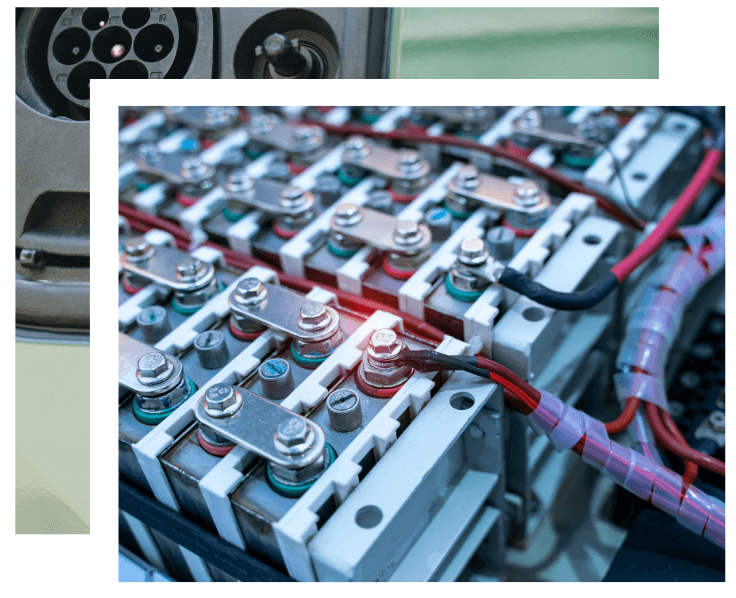
EV Battery Recycling & Disposal Services

Nationwide collections, recycling and safe storage of EV batteries.
Get in touch to receive a quote for your battery waste.

Secure Packing of Batteries

Before EV batteries leave their collection point, they must be carefully packed to prevent leaks, short circuits, or damage. Each battery is inspected for defects, then placed in protective, insulated containers that meet safety standards. Proper labelling and handling ensure that everyone in the supply chain is aware of the battery type and potential hazards.

ADR Transport of Waste

Transporting EV batteries requires strict safety protocols due to their size, weight, and chemical composition. Documentation ensure accountability throughout the journey, while trained personnel manage loading and unloading to prevent spills or mechanical damage. Safe transport is critical for protecting people, property, and the environment.

Recycling of Batteries

Once batteries reach a certified recycling facility, they undergo specialised processes to recover valuable metals like lithium, nickel, cobalt, and copper. First, batteries are disassembled and sorted, then shredded or chemically treated to extract reusable materials. Non-recyclable components are safely disposed of according to environmental regulations.

Receive your EV battery recycling quote

Photo of battery label:
Copy of MSDS
(If Available)

Electric vehicle batteries we commonly collect

There are several types of electric vehicle (EV) batteries, each with different materials, performance characteristics, and recycling considerations. Here’s a quick overview of the main types:

What is the EV battery recycling process?

Electric vehicle (EV) batteries are complex systems designed for long life, but when they become waste, they still contain valuable materials that can be safely recovered and reused.

The EV battery recycling process is a structured, multi-stage operation focused on safety, environmental compliance, and material recovery:

End-of-life or damaged EV batteries are collected from businesses, dealerships, or fleet operators. Because these batteries can pose fire and chemical risks, they are handled using specialist packaging, labelling, and transport procedures that comply with waste regulations.

Once transported to a licensed facility, batteries are inspected and assessed. Some may still have usable capacity and can be repurposed for applications such as energy storage systems. Others are classified for full recycling based on their condition and chemistry.

Batteries are fully discharged to eliminate residual electrical energy. They are then dismantled, either manually or mechanically, into modules, cells, and component parts. This step ensures that different materials can be separated efficiently and safely.

The core of the recycling process involves breaking down battery components to recover valuable raw materials. This is typically done using mechanical processing.

Key materials such as lithium, cobalt, nickel, copper, and aluminium are extracted and purified. These recovered materials can then be reintroduced into the manufacturing supply chain, reducing the need for virgin mining and lowering environmental impact.

EV battery recycling
The Benefits

Why choose us for your EV battery recycling?

EV batteries are complex, powerful units containing lithium-ion cells, cobalt, nickel, and other valuable materials. Attempting to dispose of them without proper processes is dangerous and illegal.

We provide nationwide EV battery recycling solutions, ensuring that every stage is safe, compliant, and environmentally responsible. This includes batteries from cars, buses, tractors, diggers and forklifts. Businesses we commonly collect battery waste from includes:

Garages & Service Centres
Car
Dealerships
Fleet
Operators
Scrap
Yards

FAQs

Frequently Asked Questions

No. Electric vehicle battery disposal must always be managed by licensed professionals due to the size, weight, and hazardous materials involved.

Yes, our services cover all major types of electric car and hybrid batteries, including lithium-ion and nickel-metal hydride systems.

Yes, we can provide compliant storage solutions for EV lithium battery recycling, ensuring safety before collection.

Valuable materials such as lithium, cobalt, and nickel are recovered and refined for reuse in new EV batteries and other applications.

EV car batteries can last up to 20 years. The lifespan of your electric vehicle battery will depend on charging conditions and habits, and temperatures.

Whilst studies have shown that only 5% are currently processed, technically, over 90% of the metals can be recovered. We are dedicated to increasing this recycling rate and helping businesses across the UK recycle battery waste safely.