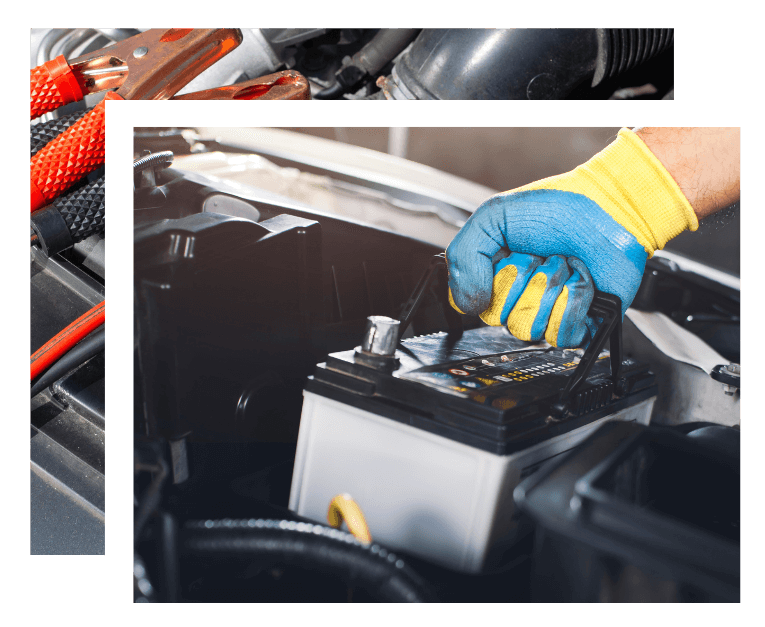
We make lead acid battery recycling simple, secure, and sustainable for businesses across the UK. Get in touch to book your collection today.
Our nationwide service provides businesses with safe and compliant lead acid battery disposal and recycling solutions. This includes for the following types:
Automotive starter batteries, forklifts, industrial equipment, backup power.
UPS systems, alarms, emergency lighting, mobility equipment.
Automotive (start–stop), telecoms, solar storage, backup power.
Mobility scooters, renewable energy storage, UPS systems.
Modern start–stop vehicles, commercial and marine applications.
High-performance UPS, telecoms, and military equipment.
Automotive and stationary power applications (longer life, low maintenance).
Industrial traction batteries, forklifts, and standby power.
Lead-acid batteries, commonly used in vehicles and backup power systems, are among the most successfully recycled battery types in the world. Here is the process involved:
Lead acid batteries are safely collected from businesses and transported to licensed recycling facilities. On arrival, batteries are sorted by type and condition to determine the most efficient recycling route. This initial step ensures safe handling of the acid electrolyte and maximises the recovery of valuable materials.
Once sorted, the batteries are mechanically broken apart in a controlled environment. The lead plates, acid, and plastic casings are separated using crushing and screening processes. The sulphuric acid is neutralised or converted into sodium sulfate for reuse, while the lead components are cleaned and prepared for smelting.
During the final stage, the lead is melted and refined for use in new batteries or industrial products. The recovered plastic is washed, granulated, and recycled into new casings or other materials. With recycling rates exceeding 95%, lead–acid batteries are one of the most efficiently recycled battery types, helping to reduce waste, conserve resources, and support a circular economy.
Our nationwide car battery recycling service provides businesses with a safe and compliant way to manage waste, whether you handle just a few units or large volumes of automotive waste.
Wherever you are located, our car battery recycling service makes it simple to manage hazardous waste safely. Our services are ideal for:
No. Lead acid batteries are hazardous and must be managed through professional lead acid battery disposal services.
Yes, we supply safe and compliant containers for secure storage until collection.
Yes, almost 100% of the components—including lead, plastic, and acid—can be safely recovered and reused.
Yes, our lead acid battery recycling UK service covers England, Scotland and Wales.
We collect lead acid batteries in any quantity, from single units through to large commercial volumes. Whether you have a handful of old automotive batteries or hundreds of industrial UPS batteries ready for disposal, we can accommodate your needs.
For larger volumes we can arrange scheduled regular collections, and for one-off clearances we'll work around your timescales. Simply use the quote form above to tell us your approximate volume and we'll confirm the best collection option for your site.
Yes. Lead acid batteries are classified as hazardous waste under the Hazardous Waste Regulations 2005 due to their lead content and sulphuric acid electrolyte.
Businesses have a legal duty of care to ensure they are disposed of through a licensed waste carrier and that appropriate documentation is provided. Disposing of lead acid batteries through general waste or fly-tipping is a criminal offence and can result in significant fines. Our service provides full compliance documentation including waste transfer notes for every collection.
Yes, automotive batteries are one of the most common types of lead acid battery we collect. Whether you're a garage, dealership, fleet operator or business with company vehicles, we can arrange collection of end-of-life car batteries in any quantity. Car batteries are flooded lead acid cells and are among the most efficiently recycled battery types in the world, with up to 99% of materials recovered and reused.