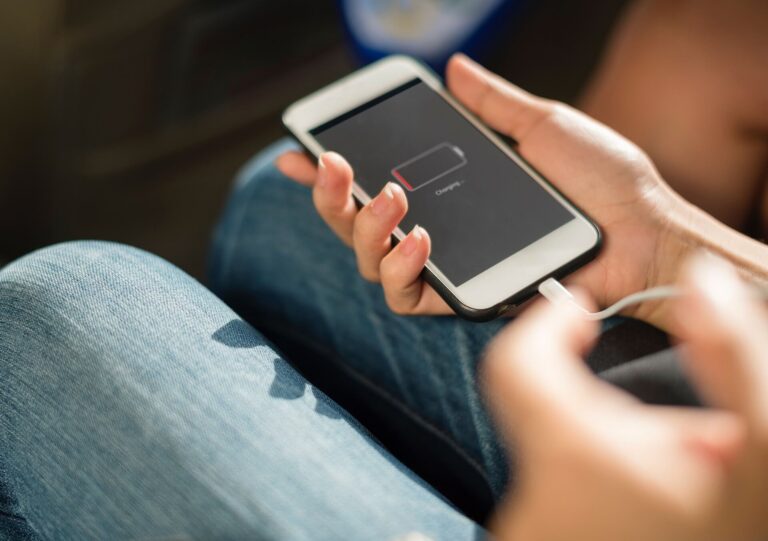
A phone battery is one of the most important components of a smartphone, providing the power needed to run apps, make calls, browse the internet, and perform everyday tasks. Most modern devices use lithium-ion batteries, which are designed to deliver reliable battery life for several years before their capacity begins to decline. Understanding how long a phone battery should last can help users maintain good battery health, improve performance, and maximise phone battery lifespan for their device.
How Long Should a Phone Battery Last?
A phone battery should typically last between two and five years, depending on how often the device is used, charging habits, and overall battery health. Most modern smartphones use lithium-ion batteries designed to retain around 80% of their original capacity after several hundred charge cycles. While daily battery life may vary based on screen brightness, apps, and network usage, how long your phone battery lasts between charges will differ from person to person. As the battery ages, it will gradually hold less charge, resulting in shorter battery life and more frequent phone charges. Proper care can help extend overall phone battery lifespan and delay the need to replace the battery.
What Percentage of Battery Health Is Considered Good?
Battery health indicates how much capacity remains compared to when the battery was new, and it is a useful indicator of phone battery lifespan.
As a general guide:
Battery Health
Condition
100%–90% – Excellent
89%–80% – Good
79%–70% – Fair
Below 70% – Poor
Most users notice reduced battery life when battery health falls below 80%. At this point, the phone may require more frequent charging and may not last a full day on a single charge.
Why Do Lithium-Ion Batteries Degrade?
All lithium-ion batteries experience chemical ageing. Each charge and discharge cycle causes small changes within the battery cells. Over time, these changes reduce the amount of energy the battery can store.
Several factors accelerate degradation:
High operating temperatures
Frequent fast charging
Keeping the battery at 100% for extended periods
Deep discharging to 0%
Heavy processor-intensive applications
Reducing exposure to these conditions can help preserve battery health, maintain performance, and support longer phone battery lifespan.
Does 5G Affect Battery Life?
Modern 5G networks provide faster data speeds, but they can increase power consumption in some situations.
When a phone frequently switches between 4G and 5G networks, additional battery power may be used. This is particularly noticeable in areas with weaker signal coverage. In practical terms, how long your phone battery lasts on 5G can depend on both coverage and device settings.
Users concerned about battery life can often switch to 4G mode when ultra-fast speeds are unnecessary.
Can Software Updates Improve Battery Performance?
Many software updates include battery optimisation improvements. Manufacturers regularly release updates that improve power management, reduce background activity, and optimise app performance. Over time, these refinements can enhance efficiency and support better phone battery lifespan.
Keeping your operating system up to date can help improve efficiency and ensure the phone uses power more effectively.
How Battery Capacity Affects Daily Usage
Battery capacity is measured in milliamp-hours (mAh). In general, larger battery capacities provide longer usage times between charges.
Typical smartphone battery capacities include:
Capacity
Typical Usage
3,000–4,000mAh
Moderate daily use
4,000–5,000mAh
Full-day usage
5,000mAh+
Extended battery life
Battery capacity alone does not determine performance. Software efficiency, display technology, and processor design also influence how long a device lasts between phone charges. Ultimately, capacity influences how long a phone battery lasts between charges, but real-world endurance depends on the whole system.
Common Battery Myths
Many battery myths continue to circulate despite advances in smartphone technology.
One common misconception is that users should always let a battery drain completely before charging. Modern lithium-ion batteries do not require this practice and generally perform better when maintained above very low charge levels.
Another myth is that all overnight charging damages batteries. Most smartphones now include intelligent charging systems that help protect battery health during extended charging periods. Day-to-day habits have a much larger effect on phone battery lifespan than occasional overnight charging.
Responsible Battery Disposal
When a battery reaches the end of its service life, proper recycling is essential. Discarding batteries with general household waste can create environmental and safety risks.
Consumers should use professional battery recycling services to ensure valuable materials are recovered responsibly. Businesses and organisations handling larger volumes of batteries can also benefit from specialist battery disposal services that comply with UK environmental regulations.
Expert Tips to Extend Battery Lifespan
Maintaining long-term battery performance does not require complicated routines. Consistent habits often make the biggest difference.
Keep devices cool whenever possible, avoid prolonged exposure to direct sunlight, and remove unnecessary applications running in the background. Using Wi-Fi instead of mobile data when available can also reduce energy consumption.
Combining these practices helps improve battery life, reduces wear on battery cells, and delays the need to replace the battery, ultimately supporting longer phone battery lifespan. If you often search for ‘phone battery last’ tips, start with the basics above.